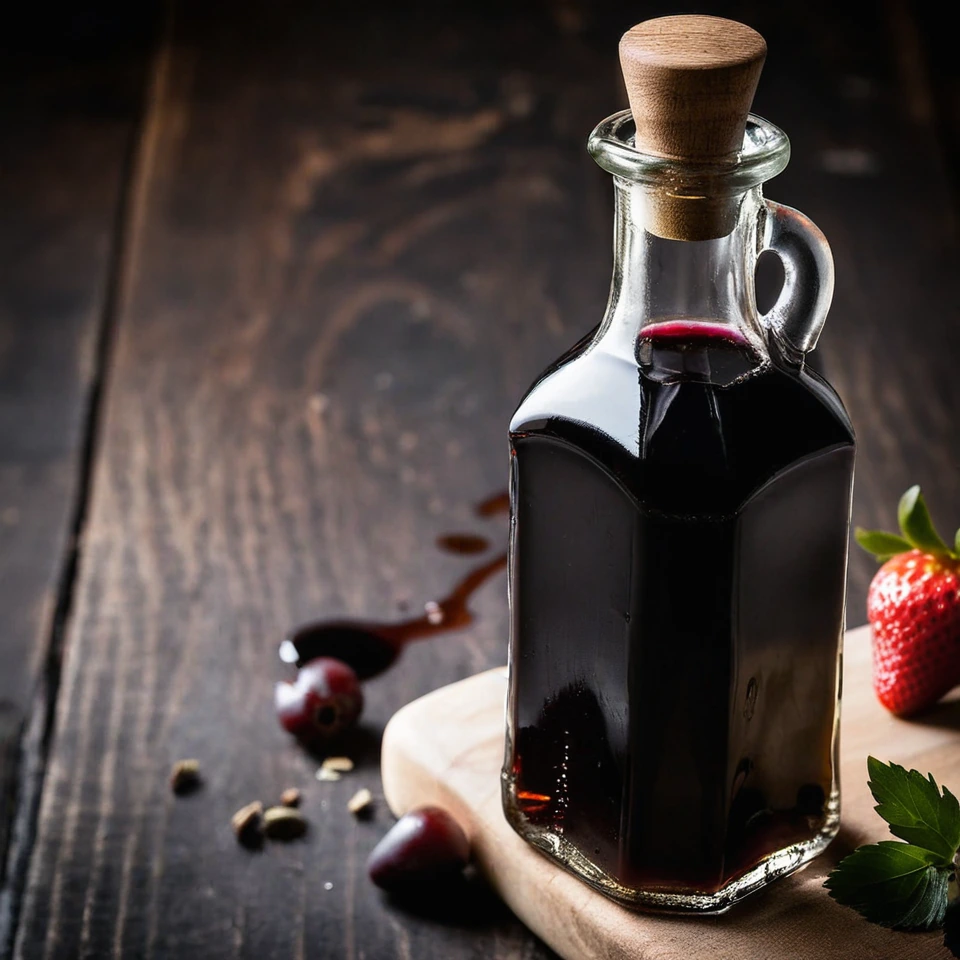
Balsamic Vinegar
Balsamic vinegar is a dark, sweet, and tangy vinegar made from grape must, which is crushed grape juice with the skins, seeds, and stems still intact. It is aged in wooden barrels, giving it a rich, complex flavor.
Notes
Traditional balsamic vinegar from Modena or Reggio Emilia in Italy is aged for at least 12 years and is often used sparingly due to its high cost. Look for labels indicating 'Aceto Balsamico Tradizionale' for the authentic product.
Uses
- Salad dressings
- Marinades for meats and vegetables
- Glaze for roasted vegetables
- Drizzle over fresh strawberries
- Deglazing pans
Replacements
- Red wine vinegar with a touch of honey
- Sherry vinegar
- Apple cider vinegar with a pinch of sugar
You might also like

Fresh Orange Juice
Fresh orange juice is made by squeezing oranges to extract their natural, sweet, and tangy juice. It's a rich source of vitamin C and antioxidants, offering a refreshing and nutritious boost to your diet.

Peanut Oil
Peanut oil is a mild-flavored, high smoke point oil derived from peanuts. Its neutral taste makes it ideal for frying and sautéing, while its stability at high temperatures ensures it doesn't break down easily.
Recipes to try

Sweet Potato and Kale Skillet with Feta
Golden roasted sweet potatoes and tender kale come together in a skillet, kissed by tangy feta and a whisper of garlic.

Lemon Garlic Butter Scallops over Rice
Tender scallops kissed with lemon and garlicky butter, served over fluffy white rice for a luxurious yet simple dinner.