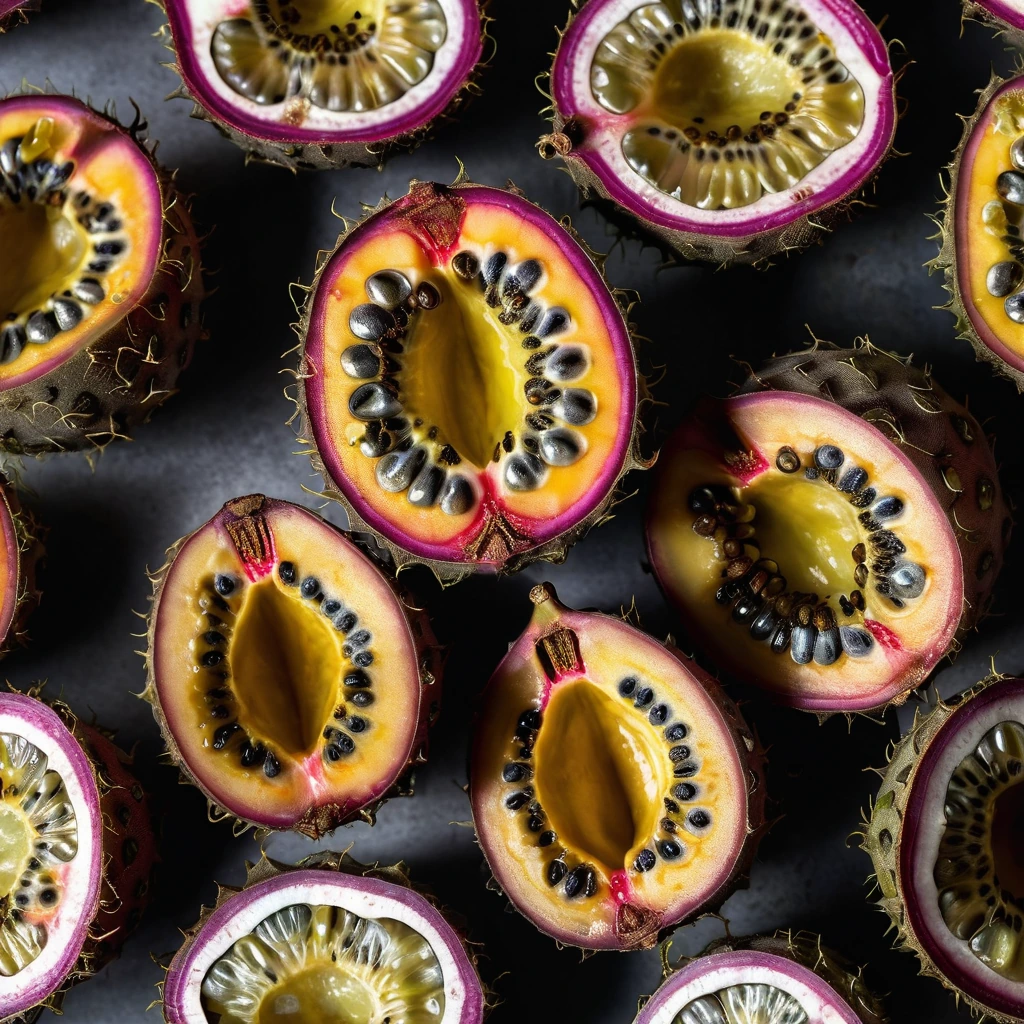
Passion Fruit
Passion fruit is a tropical fruit known for its vibrant flavor and aromatic seeds. Originating from South America, particularly Brazil, it has since become a beloved ingredient in many cuisines around the world. The fruit offers a unique balance of sweet and tangy flavors, often with hints of floral and musky undertones. Its interior is filled with juicy, pulpy seeds encased in a tough, purple or yellow rind. When eaten, the texture is both seedy and juicy, providing a delightful contrast. In cooking, passion fruit pulp is prized for its ability to add brightness and depth to dishes, whether used fresh or as a juice or puree. It pairs exceptionally well with both sweet and savory elements, enhancing everything from desserts to sauces.
Notes
When selecting passion fruit, look for specimens that are plump with wrinkled skins, as this indicates ripeness. Store ripe passion fruit in the refrigerator for up to a week, or keep unripe fruit at room temperature until they soften. To extract the pulp and seeds, simply cut the fruit in half and scoop out the insides with a spoon. Passion fruit is generally well-tolerated but can cause allergic reactions in some individuals. Its high acidity can also affect the texture of certain dishes, so it is often used in moderation.
Uses
- Desserts
- Smoothies
- Sauces
- Cocktails
- Marinades
- Sorbet
You might also like
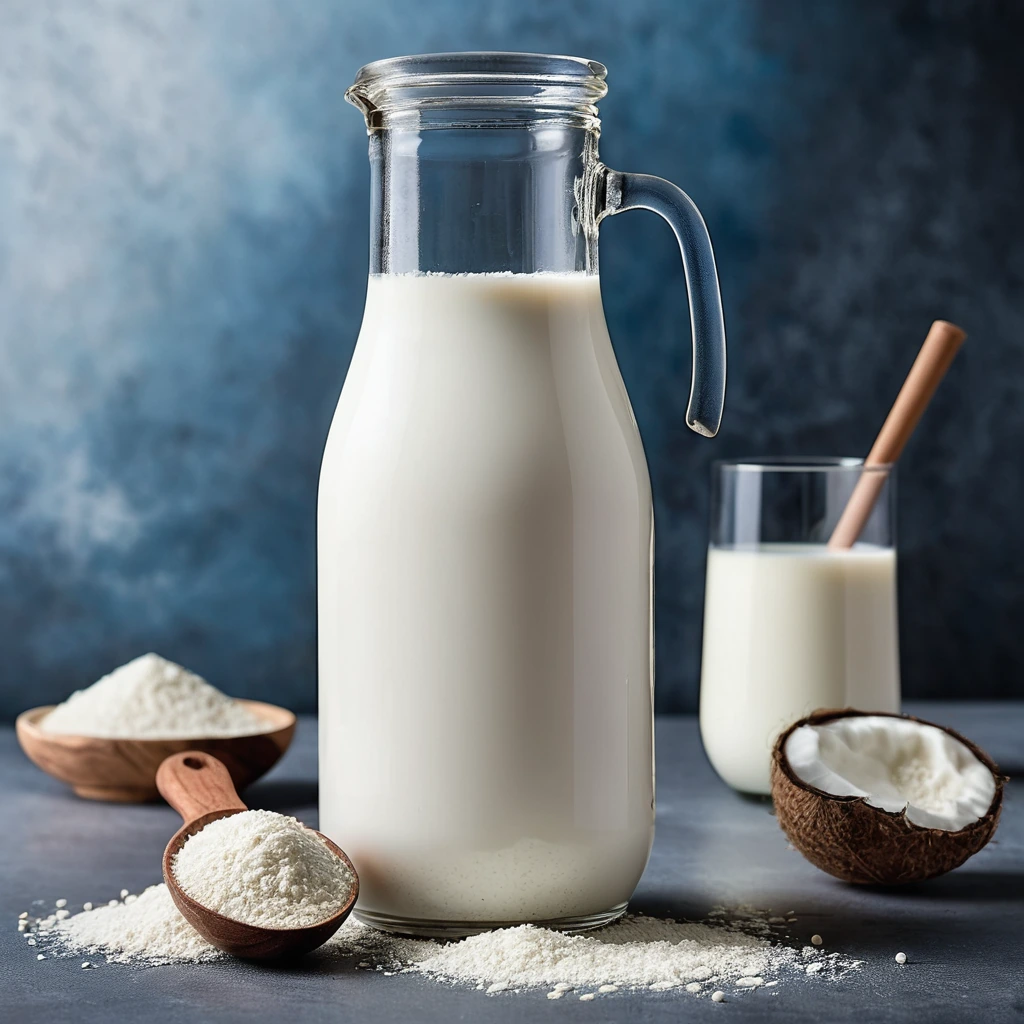
Lactose-Free Milk
Lactose-free milk is a dairy product designed for those who are lactose intolerant. Derived from cow's milk, it undergoes a process where the enzyme lactase is added to break down the lactose into glucose and galactose, making it easier to digest. Originating from the need to accommodate dietary restrictions while still enjoying the benefits of milk, lactose-free milk has become widely available across many cultures. It offers a taste profile very similar to regular milk, with a slightly sweeter note due to the breakdown of lactose. Its texture is creamy and smooth, akin to traditional milk, and it behaves similarly in cooking, suitable for baking, sauces, and beverages. When heated, it does not curdle like some alternatives might, offering reliability in recipes that require milk.
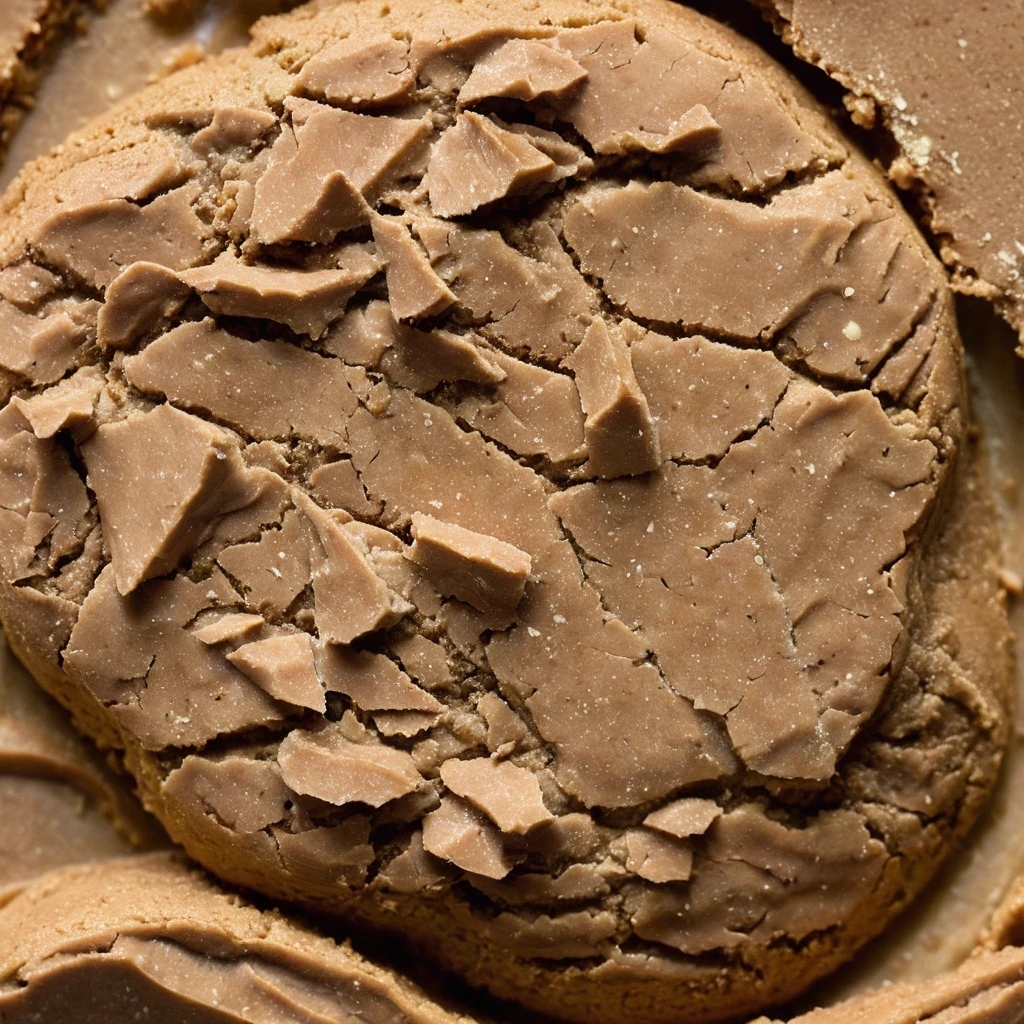
Cookie Butter
Cookie butter, also known as Biscoff spread, is a rich and creamy confection made from ground speculoos cookies. Originating from Europe, particularly Belgium, these spiced shortcrust cookies are traditionally enjoyed during the holiday season. Cookie butter boasts a complex flavor profile that is sweet yet subtly spicy, with notes of cinnamon, nutmeg, and brown sugar, reminiscent of a freshly baked pie. Its smooth and velvety texture is both luxurious and satisfying, making it a delightful spread or addition to various recipes. In cooking, cookie butter adds a depth of flavor and richness to dishes, from simple toast toppings to intricate desserts, and it melds seamlessly into batters and sauces without losing its distinctive taste.
Recipes to try
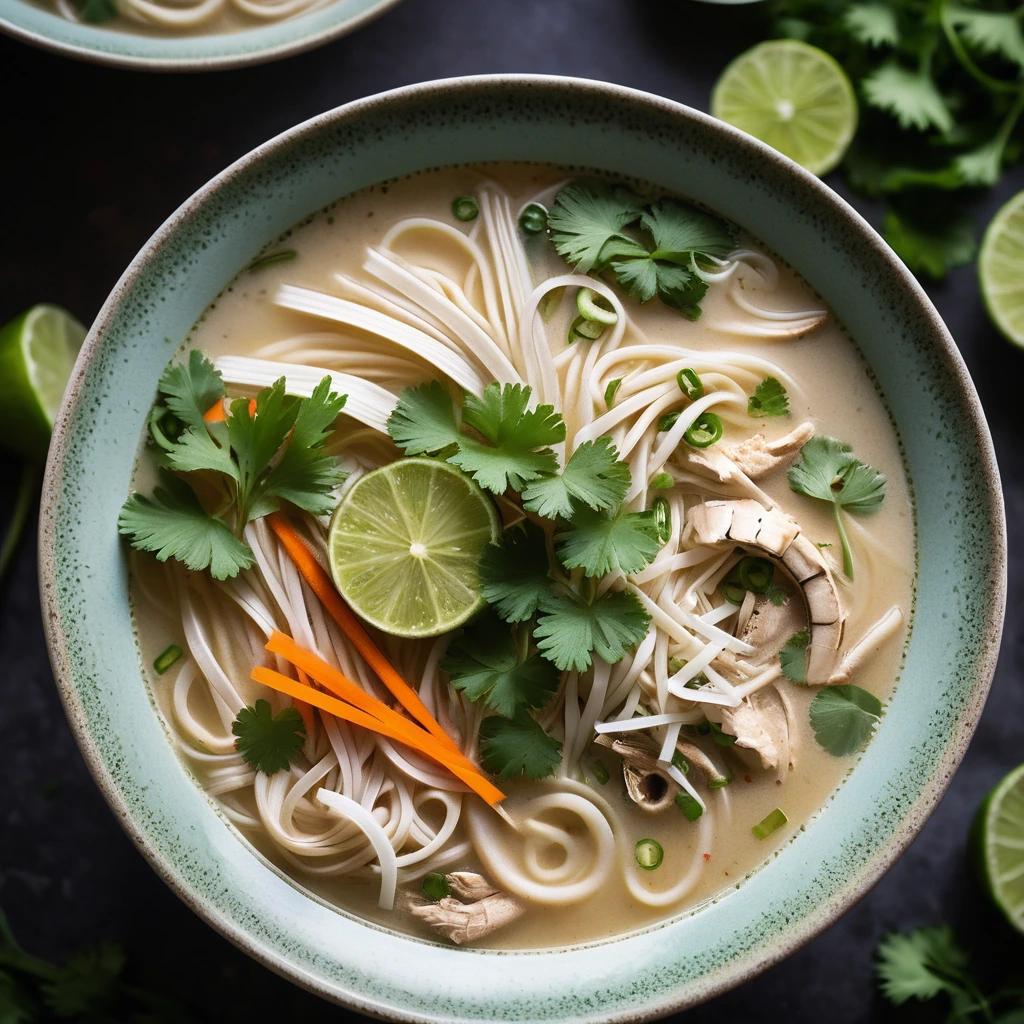
Thai Chicken Coconut Noodle Soup
Warm and fragrant, this soup is a symphony of coconut milk, zesty lime, and tender chicken with a hint of spice.

Teriyaki Glazed Salmon and Veggie Bowls
Sweet and savory teriyaki glaze coats succulent salmon fillets atop a vibrant medley of colorful veggies, creating a symphony of flavors in every bite.