How to Cook with Chili Peppers
Discover the fiery world of chili peppers and learn how to cook with them to elevate your dishes. From selecting the right pepper to mastering heat control, we've got you covered.
Ignite Your Palate: The World of Chili Peppers
Cooking with chili peppers is like wielding a culinary flame-thrower. Done right, it can turn an ordinary dish into an extraordinary one, packing heat and flavor in equal measure. But before you dive into the fiery abyss, let's get you prepped and ready to handle these little powerhouses of spice.
Choosing Your Weapon: A Guide to Chili Pepper Varieties
Not all chili peppers are created equal. From the mild Anaheim to the incendiary Carolina Reaper, the world of chili peppers is vast and varied. Here are a few common varieties and their Scoville scale ratings to give you an idea of what to expect:
- Bell Pepper: 0 SHU (Scoville Heat Units) – Technically not a chili, but a good baseline.
- Jalapeño: 2,500–8,000 SHU – A classic medium-heat pepper.
- Habanero: 100,000–350,000 SHU – The gateway to the scorched earth.
- Carolina Reaper: 1.4–2.2 million SHU – For the bravest of souls.
Prepping Your Peppers: Safety First
Before you start slicing and dicing, remember: chili peppers are not to be trifled with. Here are some safety tips:
- Wear gloves to protect your hands from capsaicin, the compound that makes peppers spicy.
- Never touch your eyes, nose, or other sensitive areas while handling peppers.
- Use a well-ventilated area or turn on a fan to avoid inhaling the pepper's fumes.
Cooking Techniques for Chili Pepper Mastery
Once you've chosen your pepper and donned your gloves, it's time to cook. Here are some techniques to harness the full potential of your chili:
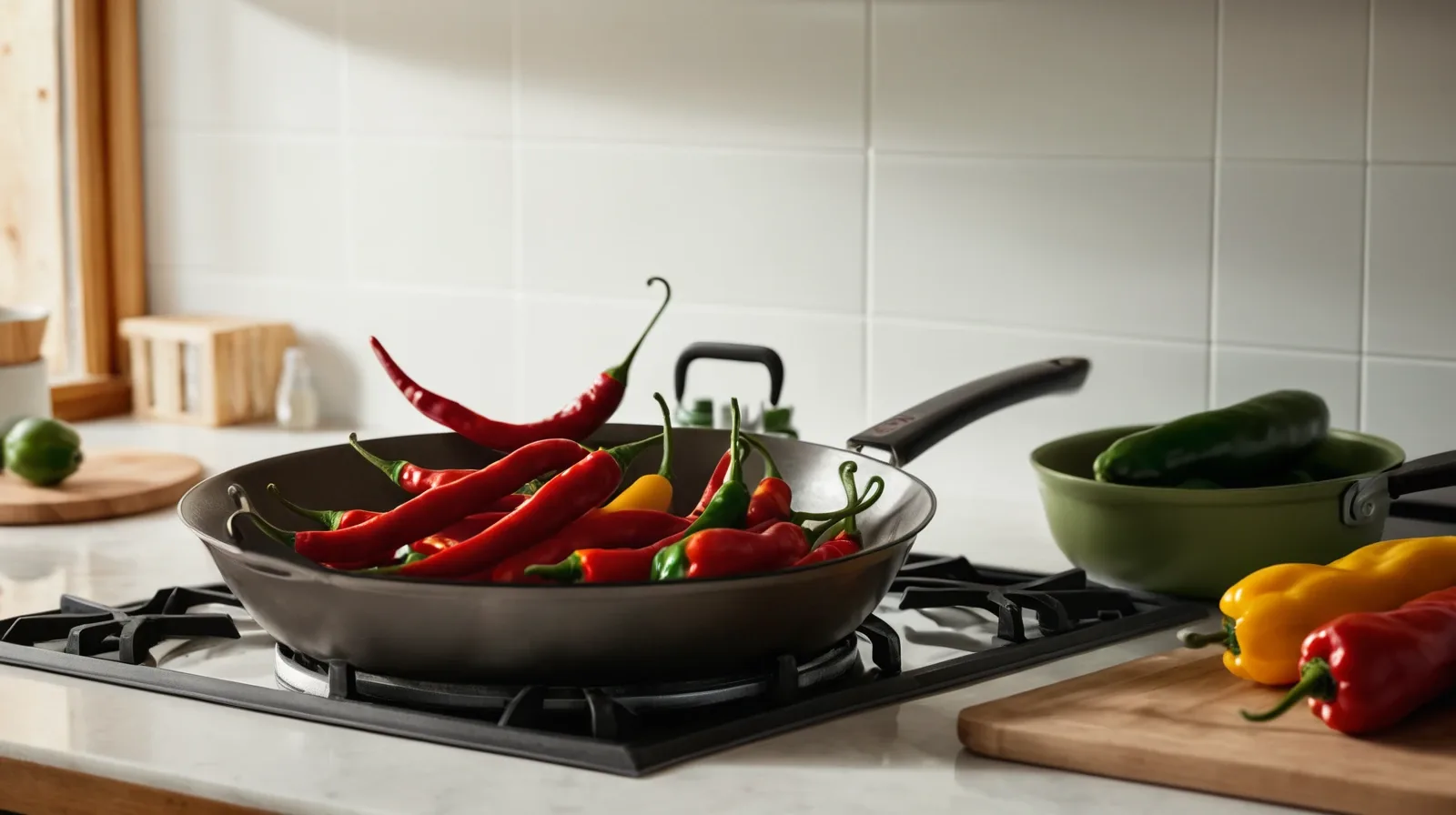
- Toasting: Roast whole peppers over an open flame or under a broiler until charred. This brings out a smoky flavor. Place in a bag to steam and peel off the skin.
- Infusing: Add chopped peppers to oils or vinegars for a spicy kick. Remember to remove the seeds if you want less heat.
- Pureeing: Blend peppers with other ingredients to create spicy salsas or sauces. Control the heat by adjusting the amount of pepper used.
Flavor Balancing Act: Tips for Cooking with Chili Peppers
Cooking with chili peppers isn't just about the heat; it's about balance. Here are some tips to ensure your dish is flavorful without being overwhelming:
- Pair spicy dishes with cooling ingredients like yogurt, avocado, or coconut milk.
- Add acidity with lime or lemon juice to cut through the richness of the spice.
- Don't forget to season with salt to bring out the flavors.
Mini FAQ
How do I reduce the heat in a chili pepper?
Remove the seeds and the inner white membrane, where most of the capsaicin is concentrated. Soaking the pepper in water before cooking can also help.
Can I freeze chili peppers?
Absolutely! Chop or puree your peppers and store them in airtight containers or freezer bags. They'll keep for several months.
Closing Thoughts: Embrace the Heat
Cooking with chili peppers is an adventure that can transform your dishes into bold, fiery masterpieces. Remember to start small, taste as you go, and adjust to your preferred heat level. With practice, you'll become a master of spice, impressing your guests and igniting your palate with every bite.